“A little bit of this, a little bit of that” is what you’ll find here. First and foremost, opinion, commentary, and analysis you simply won’t find in the dead tree media. The Blog was started to offer “other side” thoughts on local governance and related subjects, unconstrained by the boundaries of the “free press.” Useful information, diversions, humor, and other distractions from the daily grind will make regular appearances as they occur to me, and as others contribute them.
We don’t expect too many of you recall that Other Side created it’s own on-line ‘Candidate Forum’ last fall, timed to coincide with the local general election for Brunswick town council and school board members. You can read a compendium of the related posts by clicking on this link:
The response, not surprisingly, was disconcerting, though more or less in line with what we expected, with an exception or two. The prevailing attitude among such candidates, it’s fair to say, was ‘who wants to know, and why?’ Or, ‘just because we’re running for office, what makes you think we should answer your questions?’
We don’t often have contested primary elections here in town, and more importantly, directed at residents in specific neighborhoods of our community. 2014 turns out to be such a year. Charlie Priest is termed out for his State Representative seat for District 50.
Two local Democrats are vying for the right to ascend to his seat by competing in the general election in November: Ralph Tucker and Jackie Sartoris (known as JP2, and other piscatorial terms of endearment here on Side.)
Having nothing more productive to do of a Friday night with gathering storms off to the west, we’ve decided to publish a questionnaire aimed directly at this primary contest, and we consider it a ‘targeted’ candidate forum. The questions are these, and we will publish the answers either candidate sends our way.
Is honesty always the best policy when dealing with constituents, or are there times when bamboozling is politically more expedient, and therefore acceptable?
Is the Amtrak Downeaster an economic benefit to Maine and the Brunswick region? Is it fiscally sustainable?
Do you believe an MLF in Brunswick is required to support Amtrak Downeaster service to Brunswick? If so, do you believe “Brunswick West” is the optimum location for this industrial facility? If so, why?
Do you favor increasing taxes in any form to increase state revenue? If so, which taxes would you increase? And what would you use the increased revenues for?
Which approach do you believe offers greater potential for economic growth: increased government spending via bond issues and the like, or reducing government intervention in economic activity via regulation, control, etc?
Where do you stand on implementing statewide ‘single payer health care,’ as proposed by Rep. Priest?
If you support single payer health care, would you support single payer nutrition care as well? Do you think nutrition is a vital component of health care?
If a candidate for the legislature is an official of the Brunswick Town Democrat Committee, how does that candidate prioritize pursuit of Committee objectives vis-à-vis ethical obligations of running for state elective office? Especially if the candidate is running as a Maine Clean Election Act candidate?
Free Sunday night? So many people have offered to help by making financial contributions. I even received an unsolicited check in the mail today! But as the only Clean Election candidate, I already have (limited) public finance, which means... See More
“while a candidate is not prohibited from fundraising for a political action committee (PAC) or a political party committee, the candidate should be aware of certain risks in doing so. If the PAC or party committee is going to spend money to promote the candidate, the candidate may wish to consider whether the assistance with fundraising will create the public perception or lead to the conclusion that the candidate cooperated with the PAC or party committee’s expenditures to promote the candidate."
We recognize that in the hands of the right ‘artist,’ primary colors can be seen as an exercise in creativity. We simply wonder where the line is drawn between creative imagery and unforgiving reality.
Not that it matters when running to become one of our elected betters.
As we said the other day, we like to give credit where credit is due, and Councilor Benet Pols deserves credit.
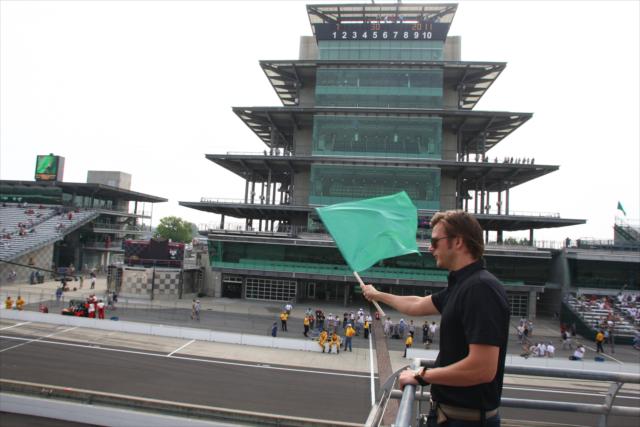
He’s the first one across the starting line following Side’s waving of the green flag on Monday.
He’s stomped the throttle, and belched a cloud of carbon footprint that would make an idling Amtrak Downeaster jealous.
In so doing, he’s setting a bad precedent. Hearing back from town councilors or school board members, especially in a public forum such as this, is crossing ‘a red line’ that defines the great and scary unknown.
And he’s not even a candidate this time around. Which, now that we think of it, could be why he was so quick on the throttle. On the other hand, other things could be at work. Only the shadow knows.
We suppose we may have to create a “Front Side” award in his honor. We don’t know yet what we’ll use to mark the level of the award, like we did with the one through five donkeys for the Back Side award. So for now, we’ll just use generic ‘atta-boys.’
We suspect that even a town councilor knows that one ‘aw-sausage’ incident can cancel out a bushel of atta-boys, but we’ll leave those details for another time. Put another way, atta-boys can turn into donkeys with the raising of a tail.
Pols has submitted a partial response to the questions in this post. For clarity, we’re going to repeat our questions, and follow them with his answers, which will be indented and displayed in red. (We may have a parenthetical note or two mixed in.)
1. Do you think an Amtrak Maintenance and Layover Facility should be built at the Brunswick West location, adjacent to the Bouchard Drive neighborhood, and if so, why?
2. If not, where do you think it should be built?
Questions 1& 2. Attached is a copy of my remarks at a NNEPRA rail forum from August 2011. It was televised so I can't hide from what I said. Some of the info may be a little stale but I still believe what I said then, particularly with respect to Bouchard. I'm sure I could be convinced that the industrial park site is as good as Crooker. I haven't looked at that in close detail recently. In one sense I think building it in Brunswick at all is a bad move----they're just signaling this is the end-of-the-line. Will Amtrak want to extend north in 5 or 10 years without a new expensive, controversial layover facility at the new end-of-the-line? WHat will become our our fancy layover facility if the Downeaster runs to Rockland or Bangor?
Rumor has it the powers that be recruited a candidate to run against me in 2011 based on my having said this. But I got re-elected anyway.....
(Ed: the remarks Pols refers to can be found at the link below; we tried to embed the actual document here, but were unsuccessful.
We strongly urge you to read the document; it is extremely thoughtful, well-written, informative, wide-ranging, and dare we say, surprisingly blunt as well. It captures the circumstances better than anything we’ve read, or written so far. It’s almost enough to make you wish Pols was on the town council. [That’s a ‘witty remark,’ for the humorless out there.])
3. Do you believe the Amtrak train, all things considered, has provided an economic benefit to Brunswick? Please explain your reasons for your position.
Question 3. Who knows? There's no objective data at all.
(And in keeping with the normal pattern of governmental entities implementing a foregone government decision, there isn’t likely to be any, at least any you can believe. We’ll have more to say about that before long.)
4. Who do you think the assets held and dispensed by the Brunswick Development Corporation belong to? Are these funds private or public?
Question 4. These funds belong to the town of Brunswick. They are public funds.
(Careful, there, councilor/counselor. It isn’t nice to fool with Johnny Protocols.)
5. Do you think the BDC’s grant of $247,000 to the Brunswick Taxi Company was a legitimate use of their assets, and that local businesses should expect such preferential treatment?
Question 5. I need to separate this question into two pieces.
Do you think the BDC’s grant of $247,000 to the Brunswick Taxi Company was a legitimate use of their assets? No, I do not.
and that local businesses should expect such preferential treatment? Compared to who, other in-town businesses that aren't connected? out of town businesses? businesses that do business in several communities including Brunswick?
(Geez! Now you’re really stepping in the Brunswick Sausage!)
6. Do you believe there is an upper limit to the tax rate that residents should be expected to pay, and if so, what is that limit? If not, how do you explain that?
Question 6. Are you referring to property taxes?
(That’s an affirmative, ghost-rider.)
7. What is the primary responsibility of a town councilor?
Question 7. That's a little philosophical for 10:00 PM. In addition, I'm not running now so I don't have my handy "thoughtful" response ready.......I'll return to Q's 7-15 another time.
I hope this counts as half a goose-egg.
(As we’ve already suggested, your effort rates more than half a goose-egg, and that’s no yolk. We do think that going ‘philosophical’ may read more into the question than we intended, but we can discuss that. We’re not worried about whether you feel in perfect alignment with the natural order of the cosmos.
We were looking more for starting at the beginning; you know, ‘why am I here and what am I supposed to do?’ Not that you can’t bring your background in Newtonian metaphysics into that as well.)
That concludes Pols’ first submission, and we congratulate him and thank him for his insights and willingness to address some ‘tough’ questions. Though as we see it, they’re only ‘tough’ if you’re more worried about your own hide than saying what needs to be said.
And we urge you again, if you haven’t already done so, to read his statement from two years ago:
Do you remember this column that appeared in The Ostrich in June? It was written by Jane Millett, and in it the lovely and gracious author made these comments about your humble correspondent:
He speaks out against the schools and their budget, but has been not only absent from town meetings but mysteriously silent as well.
While the Brunswick Town Council negotiates its way from less than 30,000 square feet of combined office space for “town office needs” (police, municipal and recreation offices) to more than 95,000 square feet of space in new or newly acquired office spaces, I have wondered at many of these council meetings, “Where is Pem Schaeffer when it really counts?”
So, I’m wondering where you’ve been, Pem? I’ve been tempted to call you, but figured you just got tired of no reponses (sic) from much of the Town Council, like so many others I’ve heard from.
No, it seems you just want to shortchange the schools, but not the municipal budget. What gives?
We didn’t realize it at the time, but this was Sally’s Jane’s way of beginning her campaign for the Cape Brunswick Town Council, which sends shivers up and down your spine.
Jane wondered where we were ‘when it really counts.’ To which we say, back at you, ma’am!
Going the extra mile, we even emailed the incumbents of both bodies at their official addresses to provide the questions and request their response for publication here.
So far, the response from both incumbents and new candidates has been a resounding
So, we’re ‘wondering where you’ve been, Jane,’ to borrow a thought.
You might remember Jane as the one who spoke at budget hearings to insist that the number one reason people move to Cape Brunswick is ‘because of our excellent schools.’ As we’ve pointed out, she never talks about why people move out of Cape Brunswick, to provide those listings and vacancies for her to fill with new residents.
Jane, along with every other addressee for our questions, is a no-show so far. Maybe we’ll have to schedule an ‘open house’ somewhere in town from 1-3 on a Sunday afternoon to see if we can get her to show up.
For now, though, apparently these questions haven’t spurred her to show up ‘when it counts.’ So to up the ante to attract her attention, we propose these additional questions just for her:
1. When you drive a prospective buyer around town and tell them about our ‘excellent schools,’ do you take them past Jordan Acres School and tell them how our School Department allowed it to fail structurally, and that it’s now scheduled for the next round of our demolition derby?
2. Do you drive them by Coffin School and BJHS on Columbia Street so they can see the rotting temporary classrooms, and tell them about the sinking floors, cracking walls, busted toilets and other deferred maintenance that has both heading for the same ash heap as JA? And with replacement costs that should raise their property taxes by a boat-load?
3. Do you drive them by that architectural nightmare known as HBS School, and tell them about the Brunswick High School that used to be located there, but was allowed to fall into such shameful disrepair that ‘there was no choice but to build a new one?’
4. Do you drive them by the former Longfellow School, a long-time, much loved neighborhood elementary school, and tell them how, according to School Department officials, and the always objective architectural consultants, the school was no longer fit for use, and could not be cost-effectively saved?
5. Do you tell them how Bowdoin College, not known for it’s thriftiness, was magically able to restore the school to fit for use status, and at the same time completely rebuild it inside for far different purposes, for the pauper’s sum of $6 million? Or about 25% of the cost of a new school these days? As shown in great detail in these two links?
6. Do you tell them that nowhere is the Cape Brunswick School Department’s commitment to excellence for ‘the children’ more obvious than in the stewardship of the buildings we educate them in? Or in the crowding we brought on by tossing aside two neighborhood schools?
7. Do you tell them that in the face of these circumstances, our per student costs have virtually doubled in recent years?
We hope, Jane, that you can ‘show up’ when it counts. You know what Woody Allen says.
And you could help us avoid a less than encouraging ‘turnout’ for our on-line forum so far.
Because this is when ‘it really counts,’ Jane. Or are you determined to add to the customary responsiveness you referred to with these words:
but figured you just got tired of no reponses (sic) from much of the Town Council, like so many others I’ve heard from.
Heck, you haven’t even been elected yet, any you’re already showing expertise at the ‘optics’ of speaking with the council.
It’s up to you, Jane. You do want potential buyers to think as highly of our council candidates as they do of our schools, don’t you?
Let’s not break any more eggs than we have to; they’re awful messy to wipe up.
(A question for our readers: do any of you know who the Architect was for Jordan Acres School, and what construction firm built it? – Ed.)
We had ever so much hoped that Jane Millett would be ‘bigger than us,’ and check in with our readers when public office is on the line, and it ‘really counts.’ But so far, we would be wrong.
Jane is supposedly running for Town Council, yet she seems to be running away from Side’s candidate forum questions. Which makes us wonder whether Jane can ‘do the math,’ when it really counts.
She’s not alone in leaving us chasing the butterflies who hold or seek public office. Benet Pols, a town council incumbent who is not up for re-election, provided a strong initial response, but since then, has not followed up, as he suggested he would.
Rich Ellis, who gets the role of Dick for purposes of this post, a school board incumbent running for re-election, said he’d be submitting his input, but is apparently having problems finding his place in our story.
So here we are, chasing Spot.
It’s frustrating when dogs are more attentive than those who happily wag their tails as they seek public office.
We’re happy to pat them on the head when they behave, but we’re sure as heck not going to pick up after them if they can’t ‘mind their manners.’
We think it behooves those who seek our approval to leave the path ahead clear. We’ve got enough problems around here without worrying about where to take our next step.
Rich Ellis, the incumbent District 1 School Board member, who is also running for re-election in a contest against Byron Watson, has submitted his answers. So he gets an
And we thank him for his interest and the effort he put in to his response.
Rich sent us a seven page document, which even by our loose standards, is a bit long for posting here on the ‘front page.’ So we’re going to post his document on scribd, while tempting you with his answer to question 1 and 2 here.
The Other Side of Town Candidate Forum: Rich Ellis 1. Do you think the Brunswick School Department exercises responsible stewardship of our physical building assets?
Since joining the School Board in January 2011, I have had frequent opportunity to interact with the Director of Facilities, Paul Caron. During this time, his abilities have been well demonstrated in our work with contractors on the Harriet Beecher Stowe project, with architectural and engineering firms on the Facilities Master Plan Study, within our budget workshops and in the day to day work related to various items such as the implementation of security systems and energy efficiency throughout our system.
The primary gap that we have with our facilities is one that has been created by a historical tendency for Brunswick not to invest, or adequately plan for, large and required periodic maintenance projects related to our facilities. One quick example that comes to mind is the boiler system at Jordan Acres.
This system was installed at Jordan Acres the year the facility opened in 1972 and was still in operation some 40 years later up until the school was closed in 2012. The problem is not that the School Department stretched its lifespan well beyond a reasonable expectation; it is that in the 40 years that that boiler was in a Brunswick School, there was no firm commitment to a planned replacement cycle for any of our boilers at our schools.
The same can be said for other systems within the School System, such as roofs and sprinkler systems. This experience is common to almost every school district in the State and, as funding sources have tightened, the competition between short-term operations needs and long term structural investments has increased.
The current funding gap for Brunswick, on an annual funding basis, is between $500k per year to $3MM per year depending upon how quickly you address the backlog of projects that have been deferred over the years. In the end, the result of delaying these investments over the last four to decades, is a backlog of projects and an environment, as described by Mr. Caron in a 2012 Budget meeting, that has us, “so busy chasing repairs” that we never to do proactive maintenance projects.
Speaking to specific facilities, we are obviously in a good place with the newest of our schools, Harriet Beecher Stowe Elementary. The same can largely be said for our now 20-year old Brunswick High School, although it is facing some of those pending periodic maintenance projects, including work with the boiler system, flooring and some needed security upgrades. If you have not been in this facility, I would recommend doing a walkthrough as it is in very solid shape.
The situation with the Brunswick Junior High School is a bit more difficult. Beyond the physical age of the facility, now a 54-year old building, there are problems related to engineering (roofing and sinking floors), meeting modern code requirements and deferred maintenance. Also, while there is generally adequate space for our core junior high classrooms, there is a need for improved space for other programs such as music, art and special services.
While the Brunswick Junior High School’s needs are extensive, it is not the district’s most urgent need. That distinction belongs to our PK-2 facilities, where we find ourselves now overcrowded at both Coffin and Harriet Beecher Stowe due to the unexpected closure of Jordan Acres.
When I first joined the Board in 2011, the plan was to provide for our PK-2 servicing by renovating both the 58 year old Coffin and the 40 year old Jordan Acres. In early 2011, however, there was a beam that cracked at Jordan Acres as the result of heavy snow on the roof. This incident, and the subsequent closure of the building, led to a thorough evaluation of the roofing system.
The findings concluded that the original architectural underpinnings of the roofing system had been flawed since the building was opened. To address this engineering issue, the replacement of many major and original systems and the remediation of external mold issues would have meant many millions of dollars spent before you even got to revitalize the facility. As such, putting more money into this facility was deemed to be a poor choice as a long term investment.
From there, the Board moved to plan to renovate just Coffin school and to expand it from 350 to 660 students, so it could handle the full PK-2 capacity. While we spent much time evaluating this option, the requirement to move the bus garage, to replace space being provided by 40 year old “temporary” mobile units along new space, and to remediate other needed code renovations, resulted in a price tag that made it a less favorable option in the long term compared to a new building, which would have a longer expected life span than the renovation project.
So we are now studying a new PK-2 facility, to be sited at the Jordan Acres property, with the expectation of bringing these plans forward for public review in the coming months.
Additionally, in recognition that the total cost to remediate the PK-2 situation and to renovate the BJH is too much for the town to manage at once, we have voted to focus on this one project and to continue general maintenance on the BJH until such time as the funding situation improves.
So, now that I have provided you with a long answer to your original question, as well as the answer to a few other questions you didn’t ask, but were possibly interested in, let me reward you with the short answer.
Yes, I think our current facilities and administrative team has demonstrated responsible stewardship of our physical building assets, but they need more financial support, each and every year, for the routine maintenance of our buildings. As an side, you can find more information about the facilities master plan study here: http://www.brunswick.k12.me.us/facilities-study/
2. Do you think the School Department should institute a merit based pay system for the teaching corps, or retain the current automatic increase, one size fits all pay scale system?
I do not believe in the traditional merit-based pay model, as it has historically relied on flawed single point in time test results. I do see value, however, in a differentiated pay system that is based on a comprehensive evaluation of the teacher, including their methodologies employed, demonstrated leadership and skills and their extent of effort. I could support it, so long as the differentiation is not based solely on single point in time test results, is developed in collaboration with teachers and staff, includes resourcing for remediation, peer assistance and review.
I fundamentally believe that we should be rewarding our best teachers and providing financial incentives to drive improvements when they are failing to meet the performance expectations of their administrators. The devil however is in the details.
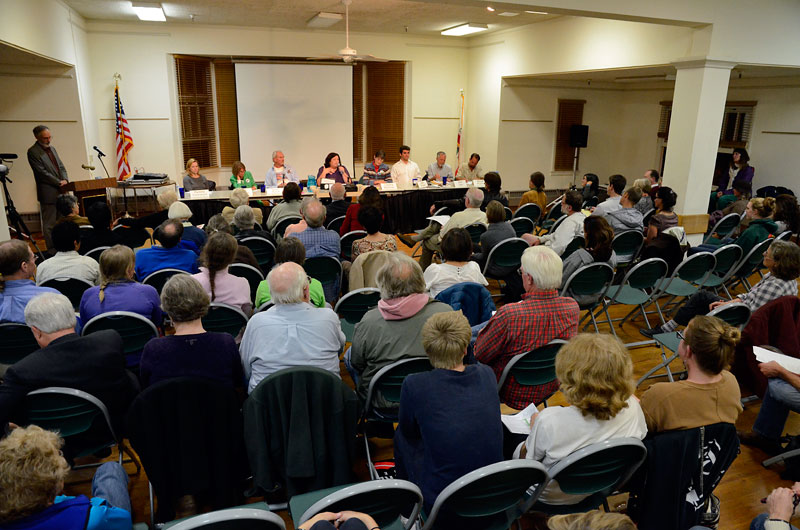
Having heard nothing so far about a public forum in which Brunswick Town Council and School Board candidates can be asked to state their positions on a variety of important issues facing our perfect little town, OtherSide has decided that we need to fill a vacuum that probably no one has noticed. Some folks just can’t hear a sucking sound.
To do so, we put forth below a series of questions for the candidates, and we look forward to receiving and publishing their answers here on a timely basis. While we have no space restrictions per se, we ask that they limit their answers to reasonable and customary lengths.
According to our Town Clerk, these are the candidates:
CANDIDATES FOR NOVEMBER 5, 2013 MUNICIPAL ELECTION
Council District 1: W. David Watson (unopposed incumbent)
Council District 2: Stephen S. Walker (unopposed)
Council District 6: Alison Harris; Jane F. Millett
School Board District 1: Richard P. Ellis (incumbent); Byron D. Watson
School Board District 2: Brenda D. Clough (unopposed incumbent)
School Board District 6: Janet C. Connors (incumbent); Daniel R. Hammond, Jr.
So lets begin.
Questions for Town Council Candidates:
1. Do you think an Amtrak Maintenance and Layover Facility should be built at the Brunswick West location, adjacent to the Bouchard Drive neighborhood, and if so, why?
2. If not, where do you think it should be built?
3. Do you believe the Amtrak train, all things considered, has provided an economic benefit to Brunswick? Please explain your reasons for your position.
4. Who do you think the assets held and dispensed by the Brunswick Development Corporation belong to? Are these funds private or public?
5. Do you think the BDC’s grant of $247,000 to the Brunswick Taxi Company was a legitimate use of their assets, and that local businesses should expect such preferential treatment?
6. Do you believe there is an upper limit to the tax rate that residents should be expected to pay, and if so, what is that limit? If not, how do you explain that?
7. What is the primary responsibility of a town councilor?
8. Describe how the town is governed, with particular focus on the relationship between town staff and the town council.
9. If you are not a native of Brunswick, why did you move to town?
10. What do you consider to be the greatest strength of Brunswick?
11. What do you consider to be the greatest challenge facing Brunswick?
12. What do you consider to be the greatest weakness of Brunswick?
13. Do you think Brunswick collects enough from taxes and other sources to cover legitimate town expenses? If not, how much more do you think would be enough?
14. Is there any question we didn’t ask that you think or wish we would have?
15. Please consider this item a ‘clean sheet of paper’ to make any statement you would like to voters.
Questions for School Board Candidates:
1. Do you think the Brunswick School Department exercises responsible stewardship of our physical building assets?
2. Do you think the School Department should institute a merit based pay system for the teaching corps, or retain the current automatic increase, one size fits all pay scale system?
3. How should the School Department evaluate its performance?
4. How should the School Department plan for and implement continuously improving student achievement?
5. Should the tax rate for School finances be capped to an upper limit, or allowed to increase continually? And how much per year is a reasonable increase?
6. Do you think recruiting students from Asia and other distant lands is a legitimate function of the Brunswick public school system? If so, why? If not, why not?
7. Do you think the virtual doubling in per student budgetary costs in recent years is justified? Do you think $15,000 per year per student is not enough, just right, or too much? If not enough, how much should that increase?
8. Do you think children are the first priority of the Brunswick School Department?
9. Describe the primary responsibilities of a school board member. Emphasize the relationship between the board and the department.
10. Did we miss any questions you wish we had asked, or that we should have asked?
11. This item is a place for you to make any statement you wish to town voters.
==============================================
We hope these questions spur a lively exchange among readers, and more importantly, an open and forthright response from the candidates in the upcoming election.
Lord knows we could use some straight talk around here. We’ve seen precious little of it in recent years.
So far, response levels to our candidate questions have been entirely in keeping with Cape Brunswick norms. Except that we’ve actually received and published answers from incumbent town councilor Benet Pols, with a promise that more would be coming. We’ve also heard from incumbent/school board candidate Rich Ellis that he intends to submit answers.
Which leads to the obvious question: Where’s Jane? Oh where, oh where can she be? Especially now, ‘when it really counts!’
Could it be that she isn’t really taking this campaign fling seriously? You might suggest it’s just another way to increase her market exposure, but we would never say such a thing. We’re better than that.
Moving on, our insatiable thirst for knowledge of candidate/incumbent thinking has led us to come up with more questions, which the interested candidate/incumbent can consider answering for extra credit. Here they are:
For Town Council Candidates/Incumbents:
1) The town council is required to approve or reject the School Department Budget for purposes of setting the overall tax rate, and submitting the budget to the public for approval in a vote. While the council cannot deal in specific school funding line items, do you think the council should exercise some form of real control over total school department spending? For example, should they set a ‘not to exceed’ (NTE) limit before the school budget is submitted to the council? If not, why not? Isn’t the council the final authority for total town expenditures?
2) Do you think the town council should set a budget NTE figure for municipal staff before budget preparation begins?
3) Would you support requiring town staff to annually prepare and submit a five year budgetary plan that projects revenues, operational and capital expenditures, and property tax rates? If not, why not?
4) Would you support requiring that annual property tax statements include a five year history of tax rates and total taxes due for the subject property?
For School Board Candidates/Incumbents:
1) Do you think the school board should set a budget NTE figure for school department staff before budget preparation begins? If not, why not?
2) Would you support requiring school department staff to annually prepare and submit a five year budgetary plan that projects revenues and operational and capital expenditures, and consequent property tax demand? If not, why not?
3) Would you support requiring cognizant school department staff to annually prepare and submit a five year building maintenance and repair plan, complete with estimated costs? If not, why not?
So there you have the latest. We submit them fully recognizing how much extra work it means for us when the answers come flooding in, and how many extra column inches we’ll have to bear the costs of publishing.
For folks like Jane, who aren’t engaging in the forum, they can continue to not engage for no extra credit.
Credit where credit is due, right? Just think how much more informed your vote will be, and your understanding of those whose seats are not up for election.
We posted our very own on-line “Candidate Forum” yesterday in this item.
We hereby augment that post by announcing that we ask incumbent town councilors and school board members who are not running this time around to submit their answers for publication as well.
Specifically, that means we seek answers from:
Councilor Suzan Wilson
Councilor John Perreault
Councilor Gerald Favreau
Councilor Sarah Brayman
Councilor John Richardson, Jr.
Councilor Benet Pols
School Board Member Corrine Perreault
School Board Member James Grant
School Board Member William Thompson
School Board Member Michelle Joyce
School Board Member Christopher McCarthy
School Board Member Joy Prescott
We think it might be even more interesting to hear their answers, given their experience base.
Gerzofsky reads rankings upside down; lauds entrenched majority role in achieving sole possession of last place.
“Utah tops our annual ranking this year, knocking longtime leader Virginia from the top spot.”
A report released by Forbes Magazine on October 13th, just two days ago, ranks our home state, Maine, last out of the 50 states in their scoring of “Best States for Business and Careers.” Last year, Maine was 41st out of 50, so in one year, we have dropped nine places to dead last.
The rankings are based on 6 factors. Maine ranks 28th in labor supply, which given our high unemployment and reputation for a great work ethic, seems pretty miserable compared to those states with whom we compete. But we are 16th in quality of life, which most likely has to do with our physical beauty and recreational assets, something government policy has no bearing on, and our low population, something government policy has a lot to do with.
Here’s how we rate on the other factors:
47th in business costs
48th in regulatory environment
45th in economic climate
44th in growth prospects
Overall, these component scores place us dead last out of the 50 states.
Did you get that? In case you haven’t realized it before, states compete against each other. People and businesses are free, generally speaking, to locate where their self-interests are best served. That includes those seeking the most generous welfare benefits, those seeking the best opportunities, and those businesses looking for the best use of their financial capital along with a flourishing supply of human capital.
I repeat: states compete against each other, and those evaluating where to locate read evaluations like Forbes’.
Anyone who responds to these results by blaming things on “the previous administration” is full of Bravo Sierra, to use a military expression. This is a comparative ranking of the 50 states, all of whom have had to deal with the nationwide recession.
In spite of that recession, 22 states improved their ranking in the last year, 4 had their position stay the same, and 24 fell in the rankings.
Only one state fell by 9 positions to dead last: Maine.
Can anyone plausibly argue that the single party Democrat rule of the last 35 years is not wholly responsible for this abysmal showing? Can Libby Mitchell, now running for Governor. say with a straight face that she and her caucus have nothing to do with this, and are the best choice to turn things around, after having run the shop since decades ago in the last century?
Can Stan Gerzofsky, an aspiring member of the lifetime legislator club, plausibly distance himself from culpability, and expect us to believe his claims that he can fix things?
(Pardon this aside: c’mon Libby, c’mon Stan. Just how stupid do you think we are?)
Based on public statements, apparently Stan, at least, thinks we’re very stupid.
In a recent candidate forum held in Freeport, and taped for broadcast on community access TV, incumbent Senator Stan Gerzofsky claimed that “in Maine, we’re racing to the top.” Stan is many things, but we didn’t know he was a star in the Theater of the Absurd.
This followed his assertion that “if we race to the bottom. all you get is to be on the bottom.”
The Forbes report shows that we’ve already won the race to the bottom, compliments of Senator Gerzofsky, Libby Mitchell, John Martin, and the rest of his friends in the Democrat ruling majority of the past 35 years.
The good news is that when you’re dead last, there’s nowhere to go but up. The bad news is that when you’re dead last, you can’t go any lower, no matter how destructive your policies may be.
Stan and friends want to dig the hole we’re in even deeper. They really don’t know what else to do; they’ve spent their careers at it. If you’re in the deep end of the pool, over your head, it really doesn’t matter much whether your head is one foot under, or three foot under. Either way, you can’t breathe.
After 35 years, it’s time to get our heads back above water.
Now. Before we run out of breath. And run out of people.
Every now and then the fates align, providing a rare opportunity for our perfect little town to rise above the riff-raffery of monotonous municipal mundanity. Opportunity briefly knocks, offering Lake Basebegone the chance to find it’s place in the pantheon of the global placemaking movement.
The recent embrace of raised crosswalks as a traffic calming measure, and back in parking (rejected by the unenlightened) before that, establish our willingness to do anything, to pay any price, to make a name for ourselves. Not necessarily a good name, but a name nonetheless.
It’s Time for a Reality Check
We are now in the “Age of Amtrak” phase of making a place of ourselves. This calls for one of our broken record reminders: Henry Hazlitt’s ‘economics in one lesson,’ which reads as follows:
“The art of economics consists in looking not merely at the immediate but at the longer effects of any act or policy; it consists in tracing the consequences of that policy not merely for one group but for all groups.”
We’re here to propose looking at effects and tracing consequences of very specific acts and policies. Especially as they relate to both “sides” of town.
Any guesses what we might be referring to? If you haven’t figured it out yet, here are some clues.
Pertinent Background
Feast your eyes and your sensibilities, if you have any, upon these morsels of Downeaster related nutrition:
“It’s change. It will be an adjustment, I’m not denying that,” said (Margo) Knight. “But the service to Brunswick has done amazing things already for the businesses downtown.” (March 2013). Keep in mind the service began just 4 months earlier.
"People are very excited about the train service being here and are excited about the increased train service," she said. (Margo Knight; September 2013)
Petrillo’s in Freeport, adjacent to the station there, reportedly has experienced ‘at least a slight uptick’ in their business, which sounds like scripted spin for ‘no tangible benefit.’
PORTLAND (AP) — Amtrak’s Downeaster train carried nearly 50 percent more passengers on its expanded Portland-to- Brunswick route than rail officials expected in the first year of the service. The numbers for the new line show that north of Portland, two-thirds of the passengers boarded in Brunswick, while the rest boarded in Freeport. (November 2013)
We’re not sure whether that means Brunswick has had a massive population outflow or what.
Former Town Councilor Margo Knight noted that while a train is a “powerful economic engine,”…. (April 2014)
Last election season, we published a ‘candidate forum.’ One of the questions we asked was this: Do you believe the Amtrak train, all things considered, has provided an economic benefit to Brunswick? Please explain your reasons for your position.
Benet Pols, now the Council Chair, answered this way: Who knows? There's no objective data at all.
The service currently carries about 150 passengers a day on the part of the route north of Portland , Quinn said.” (Against a capacity of about 1200)
Question: If we ride from Brunswick to Freeport to Portland in the morning, and back from Portland through Freeport to Brunswick later in the day, how many ‘passengers’ are we counted as? One? Two? Four?
food service revenue was $611,812; food service operating expenses were $773,420. That’s a loss of 21% on food service.
total operating revenue was $9,182,012 against total operating expenses of $16,762,301. That’s an operating loss of 45% overall - $7.5 million. With ample reason to expect the loss will grow in the current year and in the future.
In round numbers, fares on the Downeaster would have to double for the operation to approach financial ‘sustainability.’ What effect would that have on ridership?
Capacity for riders between Portland and Brunswick is 1200 per day with two round trips. Average ridership (143 per day) is barely 12% of this capacity, yet we hear constant talk of ‘expanding service to Brunswick.’
MLF is ‘required’ to store trains in Brunswick because of severe limits on track slots between Brunswick and Portland; how can service be expanded?
Clarity, we say, clarity. That’s what we need, now more than ever.
A Rare Opportunity
The Downeaster has been running between Brunswick and Portland for 18 months. As noted above, local officials were issuing rave reviews (“amazing things already for the businesses downtown”) within four months of service initiation. Having been in operation through all four seasons and more, we think it’s high time that a serious, disciplined look at the economic promises and realities of Downeaster service be undertaken.
Brunswick is uniquely positioned to get to the heart of this challenging subject. We’re home to Bowdoin College, which has a strong devotion to service learning and community involvement for the common good. (http://www.bowdoin.edu/academics/common-good/index.shtml) Not to mention that it employs some of the finest minds in economics and socio-political studies.
The community, for its part, embraces the excellence of the local academy in all regards, and reveres its contributions to economic and social justice, the advance of human knowledge, and its elevation of town character.
This symbiosis provides a unique opportunity for all to benefit by leveraging the town/gown connection. Rarely does such synergy and objectivity present itself as a resource to bring clarity to the facts of our circumstances, while providing an unprecedented learning opportunity for students and their faculty.
The Challenge
We see the key participants in this quest as the Brunswick Town Council; the town Economic Development Office; the Brunswick Downtown Association; Bowdoin administration; Bowdoin faculty; and the Bowdoin student body.
And we see the challenge as addressing the pyramid of human comprehension: data, information, knowledge, understanding, truth, and finally, wisdom.
We look to those like Professor David Vail (Emeritus) of the Bowdoin Economics Department. He’s been a leading voice on the subject of sustainability, and has also participated in various tourism studies. Some years back, he was one of a rotating group of columnists who provided commentaries on sustainability to the local newspaper.
Further, we hope Professor Christian Potholm of the Government and Legal Studies Department might have an interest in advising on the socio-political aspects of this subject.
It goes without saying, of course, though we are saying it anyway, that this is clearly a superb, real-life learning experience for Bowdoin students under the guidance of nationally recognized faculty mentors.
In keeping with the common-good motivation, we expect all related efforts to be on a non-paid, voluntary basis, though we expect some students could earn credits for meaningful research projects in their major field of study.
Analysis Topics
We’ll be very brief for now; we’re anxious to get this subject ‘out there.’ But we commit to providing a more robust outline of study structure soon for all to see.
For the moment, here are the areas we see as at the head of the list:
Surveying/cataloging downtown businesses
Identify those that could experience benefit
Identify those that would not: banks, dentists, optometry, dry cleaners, jewelers, beauty salons, outer Pleasant Street, Cooks Corner, etc
Identify/quantify declines as well as increases in economic activity; eg, Concord Coach
Discretionary entertainment funds flowing to Portland, Boston, take away from Brunswick region
How many were traveling by car or bus before train, and simply switched modes; no net increase/decrease; simply modality
Freeport and Brunswick: which way money is flowing
Identify/quantify local capital outlays and recurring operating expenses
Establish methodology for accurately assessing ridership
how to count v. stations checked off
passengers v. tickets
exclude all Bowdoin students/staff
unless you are moving, round trips are the norm, which means each time you sign up for the train, you count as at least two riders. eg: 52,000 riders for the year is really 26,000 individuals
Compare bus service: costs, flexibility, schedule, convenience, carbon footprint, connections
bus ridership
Compare use of personal vehicle
Document those asking for expanded service as described in annual report
Assess consequences of Brunswick as a dead end destination: would cost $20 million more to get trains 3 miles to the North to Cooks Corner area.
What the town could do with the $100,000 in annual operations support…calculate ROI against restaurant gross
Testing the assertions of NNEPRA:
The response to the limited Downeaster service to Freeport and Brunswick has been overwhelmingly positive, exceeding daily average ridership projections by 50% in the first 8 months of operation and generating millions of dollars in economic impact. Municipalities, tourism organizations, private businesses, developers and others along the entire Downeaster corridor are encouraging NNEPRA to add more trips to meet growing demand. Of significance, ridership on the first northbound train (681/691) increased by an average of 38% in FY13, and the last southbound train each day (688/698) increased by an average of 73% in FY13. Both trains serve Freeport and Brunswick, clearly indicating that the expansion of service is generating ridership on previously low-performing trains.
We believe that in the ‘executive summary’ version of this proposed effort, the merits of Downeaster service to Brunswick can be reduced to two metrics (or parameters, if you prefer.)
What do we mean by this term? First, it means that children below a certain age riding with paying adults do not matter from a measuring ridership perspective; they are not travelling of their own free will. And it also means that ‘volunteer train riders’ like those from TrainRiders Northeast don’t count.
Second, it means that if you were going to make your trip anyway, and simply chose to use the train instead of the bus or an auto, your ridership is irrelevant. You were making the trip regardless, and the train had nothing to do with causing it. For example, if you’re a Bowdoin student or staff member, your travel on the train was a matter of choosing from the available options; you were coming here/returning here anyway.
Third, the term ‘net’ means the difference between those who consider Brunswick and environs as their ‘home’ station, and those who consider Portland (or points south) and environs as their ‘home station.’ If there are 75 of each in a given day, the ‘net’ is zero.
2) Net Effective Daily Dollar Flow
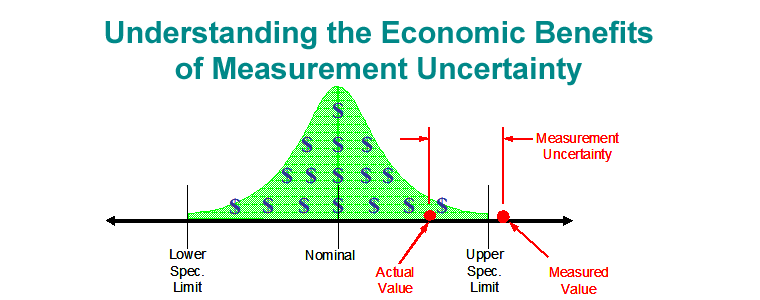
What do we mean by this? We simply mean that some passengers are visitors to the local area and are bringing/spending discretionary dollars here. Other passengers inhabit the local area, and are bringing/spending discretionary dollars elsewhere. To understand the marginal economic activity caused by the Downeaster, one must carefully examine both figures. If an incoming visitor on the train was going to come to the area regardless, the fact that he/she rode the train is irrelevant in terms of economic activity. On the other hand, if a Bowdoin student or staffer takes the train south, or any other area resident does, the dollars they spend elsewhere are lost as potential expenditures here in town.
The ‘net’ flow is the difference between economic activity by visitors here in town, and the same activity in points south by those departing from this region.
If this all seems inarticulate and confusing, forgive us. We know exactly what we mean, and trust that the economists in our midst can sort it all out.
“The Amtrak Inspector General has confirmed that Amtrak cooked the books to cover up food service losses that now approach $1 billion dollars,” Mica said.
Trains run by states in Maine and Alaska using private contractors have significantly lower labor costs than Amtrak does with its dining service employees, Alves said. The states pay $7.75 to $13 an hour with no benefits, compared with $41.19 including benefits for an on-board Amtrak employee.