Friday, May 10, 2013

Distracters of Cape Brunswick, Unite! Get on the Bravo Sierra Bus!


OK, so now you know what the gorilla looks like.  But he still is described this way:

It’s about the spending, Silly!”

An authoritative source called us (on background) to report that Professor Douhovnikoff is organizing a ‘field trip’ to Augusta, apparently to impress authorities in the Capitol with the fact that unconstrained spending growth means nothing; that only state revenue is at the core of school budget “problems.”

The Professor and Ms. Singer, the union organizer, made mention of such an idea Monday night, and now it’s coming to fruition.

We don’t know whether the school department will be brazen enough to provide a yellow school bus to carry them there, but we wouldn’t be surprised.

On the other hand, the bus below might be more appropriate, and they can probably rent or borrow it from other ‘community organizers’ in Maine, dude.

Or if they really want to make the case that austerity is killing the Brunswick school system, they could take a bus like this:

We’re confident that someone will take copious photos/video of their most excellent adventure.

We only have one question: will Johnny Protocols be driving the bus?  To those who want to ride, if he asks for a $5 donation to cover the fare, make sure you don’t sign anything.

Brunswick Clueless United (and others): Living Up to Our Low Expectations.

We’re joined today by a 500 pound gorilla.  The gorilla doesn’t want to have his face shown, but he’s given us permission to describe him this way:

It’s about the spending, Silly!”

We begin with some quotes to set the stage for what follows.                   

Mental floss prevents truth decay. Ben Franklin observed, "One of the tragedies of life is the murder of a beautiful theory by a gang of brutal facts."

As scarce as truth is, the supply always seems to exceed the demand. Winston Churchill complained, "Men occasionally stumble over the truth, but most of them pick themselves up and hurry off as if nothing had happened."
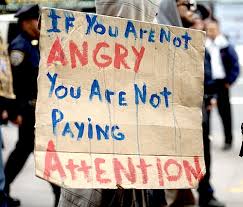
              

We don’t know if you’re paying attention, but if you are, you’ve got to be astonished by what you’re seeing, although angry makes a lot more sense.  It’s becoming very hard for us to remain civil, and be the sweetheart you expect us to be, in the face of pure cockamamie balderdash, especially in public meetings.  And worse – blatant and unashamed attempts to distract, deceive, and misinform the taxpaying public.  Using the word “Silly” should tell you we’ve got a grip on our decorum; there were at least five other words we would rather have used.

We’ve mused before about renaming the one time Brunswick Community United to Brunswick Community Unionists, because their reap purpose is to serve as a front for teachers union interests.  (See this.)  This characterization stems from the occupations of the husband wife team behind it, Sarah Singer and John Kosinski.

After what’s gone on in the last week or so, we’re struggling over whether to rename it yet again….to Brunswick Clueless United, or perhaps Brunswick Distracters United.

Why?  Because the primary phenomena on display in school budget discussions are cluelessness and distraction.  Same old, same old. We can explain.

First, flash backward to this past Monday night.  We posted our testimony here.  We were the first to speak during the budget hearing part of the meeting.

It’s about the spending, Silly!”

Damn that gorilla! 


Sarah Singer, the community organizer, union activist, and BCU principle followed not long thereafter, speaking for her organization.  She came before the council, she said, “heavy hearted.”  She said we have “behavioral issues in kindergarten and first grade” that need to be addressed.  She complained about “tax relief for the wealthy,'” the standard clap-trap of big government groupies.

                  

What she failed to say was that tax relief, miniscule as it may be, went to those who pay the taxes, which seems kind of logical to us.  She’d like tax relief to go to those who pay no taxes.  Clueless is as clueless does.

Singer then proceeded to blame things on the state, demanding that Augusta needs to “level the playing field” in education funding.  Talk to the gorilla, Sarah, because this reporter isn’t listening.  And when you’re done, check the Maine State Constitution, which says the following, in Article VIII, Part First:

Section 1.  Legislature shall require towns to support public schools; duty of Legislature.  A general diffusion of the advantages of education being essential to the preservation of the rights and liberties of the people; to promote this important object, the Legislature are authorized, and it shall be their duty to require, the several towns to make suitable provision, at their own expense, for the support and maintenance of public schools;

Then she took issue with our assertion that equating education spending to education excellence is, well, bleep-bleep.  She asserted that as her husband argues in the official MEA response (see here), “the wealth of the community correlates with the grade” received by the schools, and that’s why “Cape Elizabeth has higher grades.”

Nice going, Silly.  Socio-economic status (wealth of the community) and spending on schools are two completely different things. Check your husband’s thesis to prove the point.  You do realize that it was about household socio-economic factors, right?  Couldn’t you at least try to pay attention to our discussion, instead of just knee-jerking in response?  Couldn’t you at least try to understand your husband’s official distraction on behalf of the union? 

We had clearly pointed out that per student spending for the coming year is proposed at $1,100 more than the current year, at $15,400, compared to $6,500 at the start of this century.  And how if cost increases per student had been held to 5% a year, we’d have a budget proposal $5 million less than the one before us.

Couldn’t you at least try to deal in facts, rather than emotion?


If you don’t want to face the facts, Ms. Singer, please come back to an upcoming budget session and explain to Brunswick families how they’ll have to double their household incomes and live in bigger and better houses if they want their children to do better in school.  And then be prepared to explain how they can make that happen.  And they can sign your petition to change the town’s name to Cape Brunswick.

Along those same lines, do you believe that if your home budget is out of whack, and your credit card balances are at the max, that your employer has an obligation to pay you more?


It’s about the spending, Silly!”

There he is again; we apologize.


Next, let’s review the comments of Bowdoin Professor Vladimir Douhovnikoff, who seemed to be channeling his colleague Matthew Klingle.  Here are some highlights:

- “after years of cutting”

- “we need a sober budget”

- “bleeding needs to be stopped”

- “we need new sources of revenue”

He was quoted in the BDN this way:

“he told councilors they have “a moral responsibility [to support the schools] and the institutions that define who we are as a town.”

We seem to recall that last phrase from the past….was it Professor Klingle, the earnest liar, or perhaps Rich Ellis?  Either way, are you saying, Professor, that a 6.3% annual increase in per student spending is immoral?  And that letting existing schools fall into disrepair and crumble defines who we are as a town?

Funny; that’s exactly what we were thinking.

Tell you what, Professor.  Why don’t you look at the passage above from the Maine State Constitution, and our post about spending growth.  And then talk to the gorilla.  Growth in per student spending is growth in per student spending, completely independent of revenue sources.  And the more you spend, the more revenue you need overall; the less you spend, the less you need.  It shouldn’t be that hard for you to separate the two sides of the ledger.  And to conclude that spending drives everything else.

Between this Professor’s and Professor Klingle’s fast and loose treatment of facts, especially as it relates to ‘years of cutting,’ we’re beginning to embrace a completely new understanding of what academic freedom means.  Up until recent years, we hadn’t thought it encompassed bald-faced lying.

And you’re convinced global warming theory espoused by academics is inarguable?


Other speakers included Sally Sellit and various BCU cheerleaders.  One suggested the town should shift funds targeted for McClellan Building adaptation to the School Department.  Apparently, she’s as clueless as the rest of the group, and in complete denial over the realities of spending increases.

A pediatrician rose to speak, citing numerous problems in our schools, including “disruptive behavior on a daily basis.”  She said we have “amazing educators;” can you tell us how you know Dr. Goodwin?  She said that funding for education is “under attack,” and that we need a “thoughtful budget, not slashing.”  Children are entering our schools “inadequately prepared for kindergarten,” she said, and pressed the need for home visitation, interventions, head start, etc.  She worried that many kids would have “unstructured summers.”  She said past commitment has made Brunswick “an exceptional district,” to which we again offer our standard reply: how do you know, and by what measures?

She was cited this way in a Forecaster article:

In a letter supporting the school budget, another constituent said she "was struck that this was the first year in several where the focus was on education, not slashing budgets."

"This is the time to act to ensure we continue to support our children and educators," Alyssa Goodwin wrote, "in a way that allows them to provide the quality education Brunswick parents and residents expect."

So in the good Doctor’s mind, in the last “several” years, we’ve been “slashing budgets.”  How about some proof, Doctor?  And that second statement…couldn’t you try to use some specifics, instead of nothing but emotional trigger words like ensure, support, our children, quality, and expect?

Shouldn’t a Doctor, particularly, be expected to know what she’s talking about, and avoid using rhetoric in place of facts.

None-the-less, what she had to say reinforces that we have a very large and growing problem in our schools, and she confirmed that they are becoming social service agencies, with her full support and encouragement.

We can only guess at the root causes, as we’re sure you can.  But we can also say with certainty that this cannot continue; it’s simply unsustainable, and will continue to further erode achieving the core mission of education. 

‘Behavioral intervention’ in kindergarten?  Either something is poisoning our children’s behavior, or adults are becoming totally inept at dealing with childhood.  Or both.  Either way, if things are as these folks describe, it’s time to call ‘all stop,’ and get to the bottom of this.  Rather than think that just throwing money at it will make it go away.  The survival of desirable communities demands it.

When pediatricians talk about kindergarten aged kids having “unstructured summers” as a problem, and something that government needs to fix, you get a glimpse of just how far gone things have become.

We don’t want to end this discussion without bringing up Brunswick’s own Prince of Distraction (and other things), ‘Johnny Protocols’ Richardson, who currently serves as a Town Councilor in Waiting.

You know him; he’s the one who responded as a legislator to an op-ed of ours by saying that “nobody was responsible” when Gov. Baldacci’s first biennium budget started off at $1.2 Billion more than the prior budget.  And then was quick to cite his role in resolving the gap.

He’s the one who as Commissioner of Maine’s DECD told the town council that he “was in discussions with” at least a dozen “Fortune 500 Companies” about coming to Brunswick.

He’s the one who told us that Maine’s budget problems were caused by a decrease in federal funding, when federal funding to the state demonstrably grew by leaps and bounds during those years.  You know, he said, in so many words, it’s not the spending, it’s that others aren’t shipping us enough ‘revenue’ to pay for it.

Take a look at this passage, again from a Forecaster article:

Councilor John Richardson asked Superintendent of Schools Paul Perzanoski if there is any way his department could publish a document that shows the different kinds of revenue the town has lost over time.

The Superintendent thanks you for serving up that distracting puffball, Johnny.  And for reinforcing the argument that spending has nothing to do with things.  And for not knowing that he has done that over and over, councilor.

Cue the gorilla.

It’s about the spending, Silly!”

No matter; Perzanoski was ready to return the lobbed serve:

"It's significant to know this is not just the reduction in state aid for Brunswick," Perzanoski responded. 

(Ed: but let’s not mention the loss of 1,000 students)

"This is the removal of impact aid of the base closing; this is the loss of approximately a million dollars in tuition that we used to get each year from Durham due to consolidation. 

(Ed: the impact aid was around 25% of our per student costs, so we were losing money hand over fist on the military kids; and the Durham kids weren’t bringing their full cost with them either.)

So if you put all those three things together, like you said in the past, this is the perfect financial storm."

(Ed: if you put all these things together, and look at the truth, you realize we should be coming out ahead.  But thanks for letting us turn it into a perfect rhetorical storm, Johnny.)

Now, if we could only get Johnny to probe why spending has grown to $4,000 more per student than the national average.  And why per student costs grow by more than 6% a year.  That would be a ‘perfect cross examination storm.’

           

If after reading this, your heart is bleeding, swallow three of these and call your doctor in the morning.

           

A few quotes to close with:

As T.S. Eliot said, more than fifty years ago: "Half the harm that is done in this world is due to people who want to feel important. They don't mean to do harm -- but the harm does not interest them. Or they do not see it, or they justify it because they are absorbed in the endless struggle to think well of themselves."

"A third danger is timidity. Few men are willing to brave the disapproval of their fellows, the censure of their colleagues, the wrath of their society. Moral courage is a rarer commodity than bravery in battle or great intelligence.”  - Robert F. Kennedy

Tuesday, May 7, 2013

Tuesday Tweakers

We’re going to give you a little ‘montage’ of items today.  You’ll have to wait until tomorrow, at least, to get an update on Brunswick Clueless United.

Property Taxes:

Let’s start with this, which shows how property tax burden in Maine overwhelms the increase in the cost of living.

Makes you glad our elected ‘public servants’ have enacted so many plans over the years to lower the property taxes, doesn’t it?

School Construction Funding:

Did you see the article in the latest edition of The Forecaster, the one about new school construction?  Find it here.  It begins with these words:

BRUNSWICK — Superintendent of Schools Paul Perzanoski on Monday said a proposed $38 million plan to renovate Brunswick Junior High School and Coffin Elementary School is unlikely to go to voters this fall.

"I'd be very surprised if we went to referendum this November," Perzanoski said.

He also said it should not be considered in current budget discussions.

Town Manager Gary Brown agreed, and said even if the facilities plan does go out to referendum in November, property owners wouldn't feel a tax hike from the debt service until fiscal year 2016.

Keep in mind that FY 2014 begins in less than two months.  So a tax hike for 2016 is two years away.  It wouldn’t surprise us, however, if things happen much sooner.  Call us skeptics, but we see this article as a possible attempt to grease the skids for the current budget proposal, if not neutralize our writings on the elephant in the room.

DOE Grade Reports for Schools:

Following up on the story from last week, which we reported on as it happened, we add these items:

The letter from DOE Commissioner Bowen to Superintendent Perzanoski, which is gracious and well worth your reading and pondering:  http://www.brunswick.k12.me.us/wp-content/uploads/2013/05/School-Report-Card-information.pdf

The letter from the Superintendent to parents: http://www.brunswick.k12.me.us/wp-content/uploads/2013/05/doc06087920130503095143.pdf

Thankfully, he seems to have regained control of himself compared to his initial comments on the issue, as we reported here.

The following links will take you to the individual rating forms issued for 3 of the 4 Brunswick schools.  Once again, we think a careful reading is well worth the few minutes each will require from  you.

http://www.mediafire.com/view/?hgsppqebkyegq1g

http://www.mediafire.com/view/?upzfzs1kogbporm

http://www.mediafire.com/view/?x85l7he0i796e5x

Charter Schools & Brunswick:

By now you know about how the School establishment is trying with all its might to stop the sky from falling because 15 or so Brunswick students are planning on attending the new charter school in Harpswell in the fall, unless the legislature can manage to stop it from opening before then, which they seem to be bent on doing.

It occurred to us that if you think about it, this is the flip side of Durham kids attending Brunswick schools, in much larger numbers in recent years.  Best we can recall, when the shoe was on the other foot, no one in authority said their toes hurt.  Or tried to send the dollars back to Durham.

This is why we have gooses, ganders, and horse feathers.

Technorati Tags: ,,

Questioning the train dream? Or just looking for the facts?

We thought we’d relate a few personal experiences that highlight the opportunities for misreading ridership when it comes to the benefits of train travel.  And worse, misleading the public with the figures to keep the subsidized losses coming.

Last year, friends of ours from New Jersey came up to join us on a several day trip to the Camden-Rockport area.  They took the train from Philadelphia to Boston, and from Boston to Portland, which required finding their way from South Station to North Station.  They reversed the process on the way back home.

Did they come to Maine because of the train?  Absolutely not.  We had booked the B&B in Camden months before they decided to use the train.  And they had driven here to visit us in the past. 

We even had dinner together one night at Scarlet Begonia’s.

The reality is they came to Maine on the train, not because of the train.  They were coming one way or another, and given their choices, they picked the train.

During our working days, we often traveled to Philadelphia and Washington D.C.  on business.  We rode Amtrak between Philadelphia and the Capitol something like 30 times, we’d guess.  And more often than not, with 2 or 3 business associates.  And at least once that we can remember, we picked up Senator Joe Biden at the Wilmington stop.

The overwhelming majority of passengers on the train with us were dressed in business attire and carrying brief cases and laptops; many had boarded the train in New York City.

We chose the train because it was convenient compared to air travel over such a short distance, at least most of the time.

Did we travel to Washington to do business because of the train?  Did any of the other business travelers do so?  Absolutely not.  We were headed to Washington one way or another because our jobs required us to do so.  We had choices, and we chose the train.

Although we came to the Capitol on the train, anyone who concluded that we came because of the train would be dead wrong.

Conclusion:  Be extremely skeptical of glib, glowing reports of what the train is doing for Brunswick and Freeport based on ridership figures.  The only way to know if visitors arriving here came because of the train, or simply on the train, is to interview each one.

To complete the picture, of course, you’d have to interview area residents heading out of town to ask if they are doing so on the train, or because of the train.

And there’s no ‘profit’ in that, if you get our drift.

Technorati Tags: ,,

Monday, May 6, 2013

Statement to Town Council May 6th

Here’s the statement your correspondent delivered to the town council tonight.  We’ll have more to report on what happened in the next day or two.

=================================

· I’d like to focus on two points tonight.

· The first is this: “Nobody spends somebody else’s money as carefully as they spend their own.”

· You’re entertaining proposals to increase property taxes considerably on both the school side and the municipal side.

· I’ve focused my attention on school budget dynamics over the years, especially since base closing was announced.

· I’ve written about the growth in per student costs, which averages about 6.3% a year in the last dozen years. And showed that if it had been held to 5%, still a very generous amount, you’d be looking at a school budget of $30 million, not $35.7 million.

· My deepest concern is that no one in authority challenges costs escalating at such unsustainable rates, or asks what we’re getting in return for constant increases in spending and taxes.

· No objective measurements of achievement, or improvements in achievement, are solicited to justify increasing expenditures per student. In fact, any such measures are strenuously opposed by any and all members of the school establishment.

· Meanwhile, schools continue to move more and more towards becoming social service agencies rather than educators.

· Lacking hard data, decisions are made on the subjective, emotional belief that school system excellence is measured only by how much we spend per student, and how much we increase it every year.

· The school proposal under consideration budgets $15,400 per student, $1,100 more than the current year. By any measure, this is an astonishing increase compared to the $6,500 per student budgeted in FY 2000.

· By extension, if our enrollment had not declined by 30%, we’d be looking at a school budget of more than $50 million, demanding property taxes 50% higher than we currently pay.

· Can you abide such spending growth? And don’t brush this off by saying that economy of scale would make things more affordable. We’ve shut down three schools, and replaced them with one super-efficient, super modern school. If that’s not “economy,” what is?

· Residents, parents, taxpayers, and the council deserve better than a proposal supported with nothing more than emotional appeals equating spending with school excellence.

· Accepting such a premise is equivalent to accepting these:

  • Excellence as a parent is determined by how much you spend on your children.
  • Excellence as a cook is determined by how much you spend on groceries.
  • Excellence as a lawyer is determined by how much you charge per hour.
  • Wine becomes more excellent if you double the price per bottle.
  • A state’s and a town’s desirability are directly proportional to its tax burdens.
  • Advice from consultants gets better the more you pay for it.

· It should be obvious that being the best parent, cook, or whatever has very little to do with how much you spend. Instead, it depends on strong principles, attention to detail, and mastering the fundamentals, with a good dose of performance self-assessment.     

· We’ve often heard from speakers at meetings like this that ‘you get what you pay for.’ And I agree: if you pay teachers more, you get more highly paid teachers. If you raise school budgets, you get a more expensive school system.

· As best I understand things, you made ‘charitable contributions’ to the school department of $1 million or so last year, and are proposing the same thing this year. You avoid sticking your nose in their business, but you’re helping to mask their effect on our taxes?

· The second principle is this: “What belongs to you, you tend to take care of; what belongs to no one or everyone tends to fall into disrepair.”

· This point is closely connected to the first. If you know you can get money from someone else to replace something, you don’t have to worry too much about taking care of it. You might even be motivated to do the opposite.

· Consider Jordan Acres School, which became unusable because no one was responsible for tending to snow build up on the roof.

· Now we have two other schools that, as the chips are falling in place, will have to be torn down and replaced, because they were not adequately maintained and kept in good repair. Broken toilets and such; what does this say for our stewardship?

· The $40 to $50 million bill and tax increase for this immense expenditure looms, conveniently, just over the budget horizon we see tonight.

· I’d guess that half the people in this room would have their homes condemned if they had been maintained as the schools owned by no one but everyone have been maintained since they were built. Especially if the same architects and consultants were engaged to inspect them.

· Most of Maine Street and the historic district, including much of Bowdoin College, would be looking at the same fate.

· Do you see a problem with this picture? Do any of you feel an obligation as stewards of the town enterprise to address this abject failure by our school establishment?

· Don’t any of you feel a duty to say this shall not stand?

· If not, what is your place in this? Is it only to spend other people’s money in whatever amounts necessary to replace the physical plant assets that were allowed to deteriorate under their care? While per student spending has been increasing at rates beyond reason?

· I suppose these remarks are inspiring much grumbling. That’s too bad; I wish instead they would inspire serious introspection, and disciplined analysis of budget trajectories and asset stewardship.

· Judging by town history, that’s a wish too far. As I’ve said many times in this chamber, you can govern, or you can spend. Somehow, the choice always ends up being the latter.

· Thank you for time to speak, though it seems anti-climatic given the meeting last Thursday.

Sunday, May 5, 2013

Budgets: Is Side Discouraged? Not a chance!

               clip_image001[4]

But we have decided it’s time to unfurl and hoist the GBL flag. 

And to apply for a name change for the Town of Perfect, which many of you know as Brunswick.

Why?  Bear with us.

We post today to report on two recent budget meetings held by the town council.  Last Thursday, April 25th, the School Department briefed the council on their $35.7 million budget proposal for the coming school year (FY 14).  On Thursday May 2nd, the council held a ‘workshop’ to discuss amongst themselves where they stand on the school budget proposal.

These are preliminaries to the first public hearing on the budget, which will occur this Monday, May 6th, at 7pm.

We don’t know if you attended either of these meetings, or watched them on Cable 3.  You should be able to watch them after the fact by going here: mms://216.195.129.142/TRMSVOD/2415-1.wmv, and here: mms://216.195.129.142/TRMSVOD/2421-1.wmv.

We’ve been unable to watch recorded meetings ‘on demand’ for reasons we have not yet determined.  Hopefully you won’t have any problems.

Reactions to the meetings have been mixed.  Rich Ellis, the School Board’s master numerologist, and a major celebrity to Brunswick Community Unionist (BCU) membership, was ‘very disheartened’ by what he saw.  Conversely, another BCU member was ‘thrilled to see the SB (School Board?) put forward a budget that reflects the needs of the schools.’

To which we reply just how he knows what the ‘needs’ of the schools are.  Especially in contrast to ‘wants.’  Or more to the point, what about the ‘needs’ of taxpayers who fund the schools?

But we digress.  Back to the opening thought: were we discouraged by what we saw?  Absolutely not.

Or disheartened, like Rich Ellis?  That’s a negatory, Ghost Rider.

Appalled is more like it.  Incredulous is in the running too.  Speechless could apply, but there’s not much that can render us mute.

The atmosphere at both meetings was, to put it mildly, a love-fest for school spending.  At the first one, things were all chummy palsy-walsy and on a first name basis.

“Paul, what about the $300 for new basketballs?”

“Thanks for asking, John.  We saved $75 last year by reusing the balls we had, but now the coaches tell me their balls need to be replaced.”

“Jim, what was the school board vote on the budget?”

“Thanks for asking, Suzy.  It was unanimous. Wait; check that; it wasn’t.”

“Thanks for making that clear, Jim.”

“We’ve been dealt cards that place the burden on local taxpayers,” said the Super.  Thanks for clearing that up, Paul.  We weren’t sure whether the tooth fairy was still a player in this.  Where we come from, ALL of the burden is ALWAYS on taxpayers.

All in all, it was quite a show of the manipulative skills of the school establishment, and another fine chance for councilors to show just how obsequious they can be when in their presence.

Johnny ‘Protocols’ Richardson was his usual eloquent self in distracting from the reality that it’s all about the spending, an art he mastered during his years in Augusta.  And which he will likely emphasize in his upcoming campaign for higher office.  He’s apparently had quite an effect on other councilors as well, who now look to him as their Pied Piper.

At the second meeting, more classic council phraseology was rolled out.

“This takes a lot of guts.”

“These are tough times.”

“We’re stepping up.”

All in all, we’d ask councilors and readers both to envision a similar situation around their kitchen table to deal with the family budget.  Are the former acting with the same ‘guts’ and ‘stepping up’ that such circumstances would require?  We don’t think so.  Unless, that is, they could go to their employers and confiscate additional compensation to cover their increased family expenses. 

You know, almost like legalized, morally justified embezzlement.

What we have is a council (and a public) that has fallen for the conceit that money equals excellence. 

Because any attempt to measure anything else is demonized as a politically motivated hatchet job.

Since the council has nothing else to go by, the only way they can PROVE to the public that they are DEVOTED to excellence is to spend more, just like the schools have to spend more to prove it.

Unless you count the recently issued DOE grades.  Which depending on how you look at it, are either the spawn of evil political devils, or concrete proof that we aren’t spending near enough.

No one in a position of authority, or the schoolies, or Brunswick Community Unionists can articulate clearly what adequacy, excellence, or performance means.  And they don’t shower us with studies proving that spending equates to excellence.

Even worse, they will tolerate no attempt to establish standards for excellence, measure it, or progress towards it.  No objective data is offered in any way.

Our schools are the best?  How do you know?  How does anyone know?

- The school establishment repeatedly and rigorously dismisses all standardized testing methods as flawed, snapshots only, distortional, unrepresentative, etc.  See the Superintendent’s reaction to the DOE grading system as discussed just a few days ago in this post.

-  The teachers unions, and their ardent protectors in the school establishment, steadfastly oppose any system of performance monitoring and merit for the teaching corps.  We’re reminded of a letter from Bob Morrison some years ago, that you can refresh yourself on by going here.

What are they afraid of?  Shouldn’t they be anxious to prove how excellent they are?

When you won’t measure anything, all that’s left are dollars and GBL. 

Maybe we shouldn’t be surprised. We have three lawyers on the council, and there is no objective measure of attorney ‘excellence,’ other than how much per hour they charge.  So this fits perfectly with their world view.

But couldn’t somebody please ask for an explanation of this item from the DOE evaluation for our High School:

30% of (BHS) students who enrolled in 2012 in the UM system or the Maine Community College system were required to take remedial courses in reading and/or math.

Of course not; doing so would be politically motivated and unfair.  That doesn’t stop us from wondering how you can graduate from High School with a deficiency in reading, of all things.  Is there anything more fundamental to learning than reading?

Do you know how the Japanese auto industry managed to overcome a reputation for designing and building junk, and trounced the American auto makers?  They did it by use of “total quality management,” which is based largely on metrics as a measure of performance and improvement.  The saying goes that if you can measure it, you can improve it.  If you can’t, or won’t, measure it, you’re not going to get very far.

They were taught these techniques by an American.

Turns out there is good precedent for avoiding performance measures in our school system, and it derives from the top.  We copy here the recently adopted school board goals, and we don’t see a single item with measurement specifics included.  Some of the items leave us breathless: ‘doing one’s job’ is not a ‘goal.’ 

It’s an obligation.

Brunswick School Board Goals

(approved 2012)

I. The Board will focus on improving academic achievement for all students.

  • The Board will support administration and staff initiatives to improve academic performance using data driven decision making to strengthen curriculum and instruction.
  • The Board will promote a physically and emotionally safe learning environment in all schools.
  • The Board will work with administration and staff to ensure a successful transition to two K-2 elementary schools and one 3-5 elementary school.

II. The Board will provide oversight of the school district’s fiscal management.

  • The Board will develop and pass a school budget that makes effective and thoughtful use of resources allocated to the school district.
  • The Board will successfully renegotiate the teachers’ contract.
  • The Board will develop a strategy to address population fluctuations and potential revenue loss.

III. The Board will support effective short and long term planning.

  • The Board will work with the Brunswick community to develop a long-term strategic plan for the School Department.
  • The Board will review, revise and finalize the Capital Improvement Plan.
  • The Board will develop plans for the renovation of Coffin and Jordan Acres Elementary Schools and and Brunswick Junior High School.

IV. The Board will foster community engagement and communication.

  • The Board will build effective relationships with parents, community stakeholders, the media and local and state legislators to encourage their awareness, active participation and support of educational programs and activities in the Brunswick schools.

Conclusion:

We can’t take any more asserted but undocumented ‘excellence’ around here; what we really need is the ability to recognize reality.  Someone(s) to take the bull by the tail and face the situation.

All right, we’re drawing to a close.  But we don’t want to leave you wondering what “GBL” stands for.  It derives from our career days when various individuals would take to fawning praise of various government ‘leaders.’  Someone came up with a little card with those letters that they would hold up at such moments.  Turns out they stood for ‘gratuitous boot licking.’  That little beauty became a staple of periodic large program reviews.

As to renaming Perfect?  We’ll give you two options: Cape Perfect, or Cape Brunswick.  Both, we think, capture the sense of community pride we see all around us, at least the pride that derives from spending more and more on shrinking schools, with no measurable return or accountability.

Let us know which you prefer.

Friday, May 3, 2013

It’s Friday Happy Hour; Here’s Your Update

We’ve managed to successfully insert the graphics in the “What If” post from yesterday, and the revised version is now available.

In case you don’t want to look it up and read the new version all over, here are the graphics.  We didn’t do anything different today than we did yesterday, so we have no explanation other than Dr. Murphy was involved.

clip_image002

clip_image002[5]

Now, because it’s Friday Happy Hour, and we assume you are at least figuratively, if not literally, knocking back a few adult beverages with friends, we bring you the Bowdoin College security update.  We’re amazed at the effect on our readership publishing these highlights have had.

So here you go, in ‘beer bar bet’ form, for those of you who want to engage in a little ‘sport’ with your friends.

Number of items specifically citing intoxication, or otherwise making it pretty clear that intoxication was more than likely involved: 14 of the former, and 3 of the latter.

Number of items specifically citing vandalism or equivalent: 12.  Kicking in doors seems to be a particular favorite of the current generation.  We caution you to understand there may be some overlap between the two categories.

As W. C. Fields once said, “everyone has to believe in something, and I believe I’ll have another drink.”

Then we have Dean Martin: “I drink to forget.”  To which Frank Sinatra replied “forget what?”  Martin responded “I don’t know; I already forgot.”

Bottoms up!

Or is it tops down?

Thursday, May 2, 2013

“What If” Budget Letter to Town Council


We just posted the message below to our Town Council, which is holding a workshop on the school budget tonight at 7 pm.  I asked if public comment would be taken, and the answer was ‘no.’

======================================

Points to Consider in Budget Deliberations for the 2013/2014 Budget Year

· Let’s begin with this: “it’s all about the spending.” Everything else derives from the spending, and the increases in spending. Distractions like the Harpswell charter school barely make it to rounding error relevance.

· For sake of discussion, FY 2000 (99-00) will be used as the baseline for what follows.

· In that year, the school budget was $21,992,000, and the student population was 3,356. Per student expenditures were $6,553.

· In that same year, the municipal budget was $12,890,000, and with 21,000 residents, equating to $614 per resident.

· At present, we have on the table a School Department proposal to spend $35,700,000 in the coming budget year. Student population has declined to a department projection of 2,318 at the start of the new year (October 2013). We have lost 31% of our students since the baseline year.

· Over this same period, we’ve closed down 3 old and inefficient schools, and replaced them with one super-efficient new one.

· The school budget proposal equates to a per student annual expenditure of $15,400. By any measure, this is an astonishing increase in spending. $15,400 minus $6,553 is an increase of $8,847, or 133% in 13 years.

· I have calculated a ‘what if’ scenario that looks at how much the school budget would be this year if per student spending had increased by 3%, 4%, and 5% per year since the FY 00 baseline. The data is attached.

· The results are as follows:

If per student per year spending had increased by 3% annually since the baseline year, we would be proposing $9,912 per student per year, for a total budget of $22,976,000. This is $12,649,000 less than the proposal before us, for a reduction in property tax demand of 42%.

If per student per year spending had increased by 4% annually since the baseline year, we would be proposing $11,348 per student per year, for a total budget of $26,304,000. This is $9,321,000 less than the proposal before us, with a reduction in property tax demand of 29%.

If per student per year spending had increased by 5% annually since the baseline year, we would be proposing $12,974 per student per year, for a total budget of $30,075,000. This is $5,550,000 than the proposal before us, with a reduction in property tax demand of 17%.

· Considering that CPI growth in recent years has been in the range of 2% or less per year, the above figures are all quite generous.

· In fact, the budget proposal of $35,700,000 currently on the table works out to an average increase in per student spending per year of about 6.25% since the baseline year. This very high growth in cost, especially when viewed in the context of a near-stagnant economy, especially at the state and local level, and anemic per capita and household income growth figures, is irresponsible, unsustainable, and unaffordable.

· Can you imagine what we would be looking at in budget and tax growth if the rosy projections provided by Planning Decisions Inc had come to pass? They would have us recovering to the peaks of a decade ago, with 3.000 students or more! We’d need two schools more than we currently have, and at the proposed per student costs, the school operating budget alone would be in the range of $50 million (without capital program consideration), calling for a 46% increase in property taxes beyond anything considered at the moment.

· Remember the ‘good old days’ of Jim Ashe, who was quite fond of pointing out how many school districts in Maine spent more per student than Brunswick, even though Brunswick was in the sweet spot on the bathtub chart of efficient school district size and operating cost?

· Now that our per student expenditures are on a steep trajectory through the roof, the tactics have switched to talking about total budget, rather than per student costs. This works out very nicely when enrolment is sinking. In particular, School Board member Rich Ellis is fond of generating numbers that distract interest away from the ‘cost per unit’ of our school system. One of his products is this, suggesting that school budget growth is modest, and on a par with municipal budget growth. He shows that total town costs have increased more than total school system costs.

clip_image002

· Ellis points out that “The compounded annual growth rate for both the Municipal and the School budgets over the last 10 years are just about equal at 3.3% and 3.2% respectively,” with no mention of the “population” served by each. He has decided that clarity is shown thru budget totals, regardless of the population size provided with services.

· While school population has declined precipitously, and is expected to continue declining, town population has remained more or less flat. If you were raising a family of 6 kids, and 3 of them reached adulthood and went out on their own, would keeping your household budget growing modestly be something to celebrate?

· Here’s another Ellis product. It tries to divert attention from the details undergirding the totals with another distraction. His message is that we fall somewhere in the middle of the pact for budget growth in the coming year among a selected group of our ‘peers.’ No mention of school enrolment trends; you can be pretty certain none has declined as badly as ours. No mention of per student cost growth over the last ten years or so. No mention of per student cost. Just how much the budget is increasing over the current year. All in all, this provides to the non-critical thinker exactly what they want to see. “We’re just like everybody else; what’s the big deal? Nothing to see; just move along.”

clip_image002[6]

· Brunswick’s property tax rate was $21.20 in FY 00. Now we could easily be seeing a rate of $30.00 in the next two years or so. If the sales tax rate and the state income tax rate increased by the same proportion, we’d be paying 7% in sales tax and more than 11% in Maine income tax. In addition to the property tax increase. And if I could adjust this for a revaluation during the period discussed, it would look far worse.

· I’ll conclude with this: “it’s all about the spending.” Everything else falls in place in service to the spending, and the increases in spending. Thinking this can just keep going on and on without serious consequence to everyone’s future is folly beyond belief.

======================================================

Pasting in the excel spread sheet ‘what if’ computation backup was a bit too challenging because of the size.  If you’d like to see it, or any other data we have in our archives, send us an email and we’ll pass it along.

Breaking News: Maine Teachers Union, BCU Throw in the Towel


We’ve got lots to say about the unfolding situation surrounding DOE issuance of grades for government schools in Maine.  So we’ve got two choices.  Spend a couple of days drafting witty and insightful commentary on all aspects of the news and reactions, noting the various delicious ironies that apply.  Or, we can simply resort to a briefer ‘headline clip’ style to make sure that our readers are updated with the basics as quickly as possible.

We’re going with the latter approach so we can get our list out of our job jar and onto Other Side front pages.  So fasten your seat belts; this will be a fast ride.

Kosinski, writing for Maine Teachers Union, publicly declares parents are at fault, not the schools.

You might remember the name of Brunswick resident John Kosinski from this recent post, in which we described the role of he and his wife, Sarah Singer, in setting up the BCU as a front for union interests in local school budget deliberations.

Not surprisingly, he had a release all ready to go on the MEA web page responding to the DOE school grading.  You can read it here:

http://maine.nea.org/assets/document/ME/Maine_Flawed_Grading_System.pdf

His summary is this:

Conclusion:

The Governor’s grading system is deeply flawed. Not only does it use a measuring stick that is biased and incomplete, but it oversimplifies the extremely complicated process of educating children into a sound bite. However, hopefully what policymakers can gain from this ill-conceived and poorly executed public relations gimmick is that there are deep socioeconomic divides in Maine that have tremendous influence on our children and our public education system. These divides deserve greater scrutiny and interrogation as we proceed to make all public schools in Maine successful.

Let us summarize his full release:

  • Sure the scores and grades are discouraging, but we have nothing to do with it.
  • Ordinary citizens are too out of touch to understand.
  • Dedicated, organized, and extremely competent education professionals are powerless to overcome socio-economic destiny. 
  • Stop believing that a good ‘public school’ education is the great socio-economic equalizer. 
  • It’s parents’ fault for not earning higher incomes. 
  • Government needs to make sure everyone has the same amount of stuff and money to spend. 
  • Otherwise, there’s nothing teachers and the schools can do to yield better results and outcomes.

New York Times Provides Escape Mechanism.

Lucky for the teachers union, the beloved ‘gray lady’ provided timely material for focusing attention on school performance anywhere but on the government school establishment and the teachers unions.

http://opinionator.blogs.nytimes.com/2013/04/27/no-rich-child-left-behind/

Remember those documentaries that were released a few years back?  “Waiting for Superman?”  “The Cartel?”  “The Lottery?”  Remember “Stand and Deliver?”  Remember Michelle Rhee and her attempts to improve the Washington DC school system, probably the most socio-economically deprived student body in the entire US?  And how she ended up being canned to placate the teachers union, who didn’t like being held accountable?  Remember “No Excuses?” 

All of these embarrassing counters to conventional union and establishment wisdom are “flawed, mean-spirited, vindictive, politically-motivated, destructive fabrications.”  Don’t believe us?  Just ask John Kosinski or Paul Perzanoski.

BCU “Imagine and Invest” Theory Debunked.

Kosinski and Singer organized Brunswick Community Unionists last year around the slogan “imagine our future, invest in our schools.”  Hundreds signed their ‘petition,’ joined up to their Facebook page, and posted signs around town before the budget referendum.

BCU membership is verklempt over the grades issued by DOE; just take a look at their Facebook page.  They should be even more verklempt over Kosinski’s statement described just above.

Why?  Because it completely discredits their primary thrust – that spending more money on schools will make things better.  He says teachers can’t fix things, because how the kids do in school is pre-determined by the standard of living parents provide for their kids.

Accordingly, we expect BCU to shut down operations in the next few days, and to be silent in upcoming budget hearings and public meetings.

“Equity:” Moral Imperative for HBS School Discredited.

The primary rationale for building Harriet Beecher Stowe School was a moral imperative for ‘the community’ to provide ‘equity’ for our elementary students.  At the time, Longfellow, Coffin, JA, and Hawthorne were seen as being socio-economically reflections of their neighborhoods, and therefore providing unbalanced education opportunities for their separate student-bodies.

Michelle Small, a school board member at the time, and various others wrote publicly how combining the elementary grades in a single school would overcome the problem, and this is how we ended up with a single school for 3-5 (now 2-5).

But as you can see, Kosinski’s MEA statement and the NY Times item point out that putting kids in one elementary school doesn’t mean anything.  Each child still carries with them the socio-economic baggage of their family circumstances.  Equity of school environment has nothing to do with their success, and teachers are powerless to overcome the deficits.  So stop asking for teachers to do better.

School Department, Unions Clueless on Established Data Records; Perzanoski, MEA ‘shocked, shocked’

Not to belabor the point, but the grades issued yesterday do not break any real new ground.  They simply aggregate pre-existing statistics from established data bases into a single letter grade for each school.  All of the component data was collected at schools themselves, and by definition, was well known to the school departments and the teachers union. 

Expressions of surprise, shock, or being demoralized result more from having the public see the data in a form that is comprehensible, and that can be used to compare schools and measure progress.

(Do you suppose Sally Sellit is revising her sales pitch today?)

Claiming that the system is ‘punitive and arbitrary’ and a ‘public relations gimmick’ is a ‘political’ reaction to being faced with reality.  And suggestions that perhaps its time for accountability to enter into the equation.

BTW, if you want to research the grades yourself, start here:

http://www.maine.gov/doe/schoolreportcards/reportcards/allreports.html

http://dw.education.maine.gov/education/MEDW/Snapshots/SnapshotSelect.aspx

We spoke in a recent post about remediation rates for students entering the U Maine and Community College systems.  The grading report for Brunswick High School states that 30% of BHS students enrolling in those systems were “required to take ‘remedial’ courses in reading and/or math.”

That seems a bit startling to us, but what do we know?  What we know is this…the 30% figure is hardly a ‘political’ or ‘punitive and arbitrary one.’  It is data from the education establishment funded with our taxes.

When we have more time, we’ll try to link you to the source of the documents we have in our possession.

Ironically, now that we think of it, the reaction from Kosinski and the union, and Perzanoski, is akin to that of Barry Mills to the NAS study released last month on what Bowdoin teaches.  “Mean-spirited, vindictive, hatchet job, by those who don’t understand, only for political gain.”

Good News for Brunswick Property-Taxpayers.

Now that Kosinski, the MEA, and the NY Times have made it clear that school success is not determined by how much the department spends, but by the family situations of the students, we should hear an end to the constant prodding to spend more, more, and then even more as the only way to raise our school performance to excellent, or maintain already achieved excellence, depending on which claims you have bought into.

Cold hard truth: “Free people aren’t equal; equal people aren’t free.”

This may come as quite a shock to those at the MEA who believe:

that there are deep socioeconomic divides in Maine that have tremendous influence on our children and our public education system. These divides deserve greater scrutiny and interrogation as we proceed to make all public schools in Maine successful.

And those who agree with them as well.

All of the foregoing makes you wonder about socio-economic inequalities in the context of Bowdoin College.  A highly selective school, very expensive, that prides itself on the great achievements of its alums.  Juxtapose the underlying factors in all of that with the foregoing discussion from the union and the NY Times blog.

MEA: “Stand In Solidarity”

We thought we’d end this post on a ‘high note.’  As we were checking the MEA site for the Kosinski statement, we came across this item from the MEA President.  Our guess is that it was written before the DOE school grades issue broke.

“Thank you for all you do for your colleagues, communities and students. MEA members are amazing activists who make a difference in the lives of thousands of students and Maine residents each year.”

“We shape Maine’s potential by helping our students be successful in academics, social situations and civic involvement. We educate our community members of all ages as we strive to safeguard everyone’s future.”

The above thoughts seem to fly in the face of Kosinski’s statement, at least in our view.  Unless you’re of the mind that any success in school results from teachers, but any lack of achievement does not, because it’s the parents’ socio-economic circumstances that are at fault.

“I don’t have to tell you that we are in difficult times. Every affiliate of the MEA has more than our share of problems with which to contend. How will we make it through? Imagine the power of 24,000 MEA members standing shoulder to shoulder in solidarity!”

“Our retirees are living on less and less even as costs increase. COLAs have been frozen by the legislature in the past and for upcoming years. Future increases will be capped at 3 percent instead of 4 percent, and the increases will be applied only to the first $20,000 of annual retirement income. And remember Maine’s educators who contribute to MePERS will not collect the Social Security they may be due because of WEP/GPO.”

http://maine.nea.org/home/1451.htm

We don’t know about the rest of the state, but here in Brunswick, we have ample proof that teachers get generous raises every year, by contract, regardless of system performance or their own. Their raises are even bigger when you consider that taxpayers absorb 90% or so of the cost of their benefits, and any increase in the cost of those benefits.

These are ‘difficult times?’  Compare your income and benefits growth in recent years and let us know.  As for us, we’re retired, and our retirement income has not had any 3% or 4% increases provided by someone else.  Nor did we ever, ever receive any salary increases that were contractually mandated.

So allow us a brief moment of pettiness.


Go look for tears of sympathy elsewhere, MEA.  We’re all out here.

Wednesday, May 1, 2013

Oh, How We Look Forward to Town Offices Moving to The Near-New McClellan Office Building

Remember when we fantasized about this little beauty?

It was in this post dating back about a year and a half ago.

We can’t remember exactly when the McClellan Building was constructed by Bowdoin College.  But we figure that the average citizen driving by would conclude it’s in ‘like new’ condition, especially compared to other town properties, such as Federal St. offices, our dilapidated school buildings, etc.

You know where it is…right near the location where The Glamorous Pig should be opening soon, once we get the tax breaks from the town that are de rigueur in such matters.  We may have to change our name to J. Poppycock Projectile to make it happen, but we’re easy when it comes to such things.

Last we can recall, the town was planning on spending around $800,000 or so, up from early projections of $300,000, to ‘adapt’ the building for town use.  We don’t think any of that sum was characterized as remediating ‘deferred maintenance issues.’

Color us surprised, then, when we became aware of these troublesome little details of McClellan Building condition, before our municipal operation moves into the building.

                 mclellanbldg22 012    

                 mclellan bldg 001

                 mclellan bldg 003

                 mclellan bldg 005

                 mclellan bldg 006

                 mclellanbldg22 001

                 mclellanbldg22 002

                 mclellanbldg22 003

                 mclellanbldg22 005

                 mclellanbldg22 006

                 mclellanbldg22 007

                 mclellanbldg22 008

                 mclellanbldg22 009

                 mclellanbldg22 010

                 mclellanbldg22 011

Many of you may consider these odds and ends to be ‘down in the noise.’  Yet taken in the context of this town’s penchant for declaring facilities ‘beyond repair and in need of replacement,’ and the ready availability of architects and consultants who will gladly document the hidden crises and financial black hole hidden inside the walls, we can’t help but be a bit concerned.

Perhaps the building was designed and constructed with a useful life expectancy of 30 years or so, and by the time our town staff moves in, it’s at half it’s projected life.  You don’t want to throw good money at a building that’s in it’s latter years, do you?

Then there’s the problem of diesel fumes attacking the exterior materials and finish of the building.  It was built well before anyone knew the trains would be coming.

But as we know all to well, progress comes with a price.  And Bowdoin College ain’t no dummy when it comes to playing cards.  

You gotta know when to hold ‘em, and know when to fold ‘em.

Technorati Tags: ,,

Predictably, Perturbed Public Pedagogue Paul Perzanoski Protests “Politics,” Proficiency & Progress Points

We reported earlier today on the letter grades Maine’s DOE has assigned to Brunswick Government Schools in this post.

Brunswick’s School Superintendent Paul Perzanoski, a well established critic of Governor Paul LePage (exhibit A; exhibit B), promptly responded to the grades, calling them

“political” and “a continuation of the discrediting and dismantling of public schools for the purpose of using public dollars to fund private and religious schools.”

Words like hyperbole and hyperventilating come to mind, but we won’t mention them here.  Paranoia and victimization complex do not come to mind, so we won’t even hint at them.

As to the grades and related details, he said this:

“I had no expectations, but it’s demoralizing.”

Then he added this:

“It’s the same thing they’ve been trying to do since 1983, which is to remove money from the public schools and use it to fund parochial and private schools.”

In response to these lucid comments, uttered with admirable detachment, we have a question or two for the Super.

- You had no expectations?  And you run the Brunswick School operation?

- Could you identify the “they” who has been out to get you since 1983, and what happened in that year that is burned in your memory?

- Where were you in 1983, and how long have you been in school administration here in Maine, and especially in Brunswick?  Did the protagonists from 1983 follow you here?

- What is ‘political’ about benchmarking individual schools against the Maine average?  What is ‘political’ about comparing individual school metrics from tests given in all schools?  Aren’t these by definition relative scores?

- Aren’t math and reading essential core competencies that should be top priorities in basic education?

- How does reporting scores on standardized school measures rise to the level of ‘discrediting and dismantling of public schools?’


We’ll close by pointing out that if you’ve been following school affairs over time here in town, you know all too well that the school establishment objects to and scrupulously avoids any suggestion of metrics, testing, qualifying, or just about any form of performance assessment as ‘flawed,’ ‘unfair,’ ‘hostile,’ and any other demonizing term you care to suggest.

So we shouldn’t be surprised.  The past is prologue.

Bulletin: DOE Issues Brunswick School Grades


The Maine DOE has issued the grades it is assigning to Brunswick Schools for school year 2011-2012.

Here they are:

Harriet Beecher Stowe Elementary:  HBS receives a C, with a points total of 246 out of a possible total of 400.

Brunswick Jr. High School:  BJHS receives a B, with 285.5 points out of a possible total of 400.

Brunswick HIgh School:   BHS receives a B, scoring 336.7 points out of a maximum possible 500.

Coffin School is not rated, because it is a K-2 school, and the grading is only being applied to schools with Grade 3 and higher.

All we can say is you better stand by for budget “incoming.”  The textbook school establishment response to these scores will be to shout they demonstrate how underfunding over the years has penalized the children, and that crisis stage has been reached.  The only possible solution is spending more….lots more.

Brunswick Community Unionists (BCU) is probably preparing their new script as we type, and may even be calling for redesign of their signs for this year.

As soon as we hear what the MEA has to say about all of this, we’ll let you know.